
How Does TripAdvisor Dominate Travel Search Results Across Every Location?
When you search for “best restaurants in Paris” or “things to do in Tokyo,” TripAdvisor consistently appears at the top of search results. This isn’t luck—it’s the result of one of the most sophisticated programmatic SEO implementations in the travel industry.
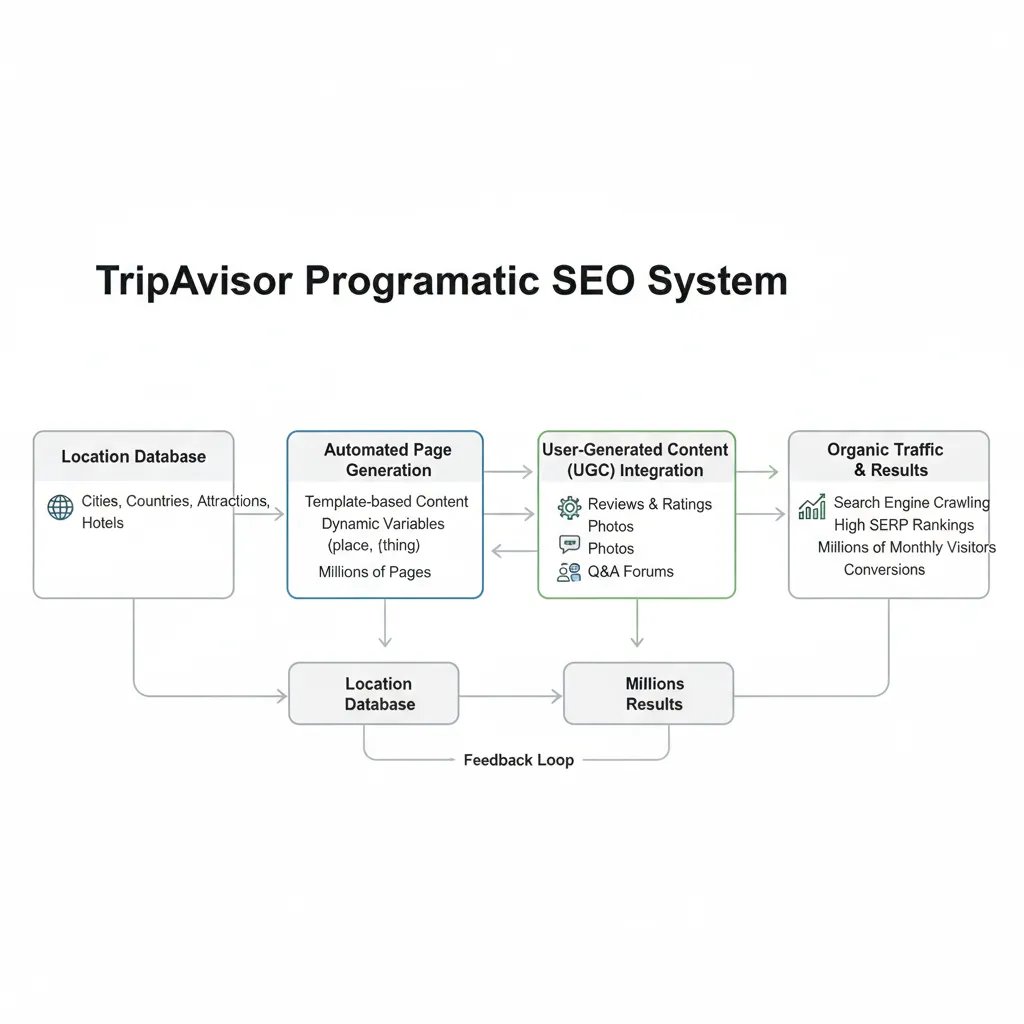
TripAdvisor generates over 226 million monthly organic visits through an automated content strategy that creates millions of location-specific pages. With more than 75 million pages indexed in Google, they’ve built a system that scales user-generated content into search dominance.
Key Insight: TripAdvisor’s programmatic SEO success stems from combining massive user-generated content databases with location-based URL structure patterns, creating millions of targeted landing pages that capture specific travel search intent.
Their approach demonstrates how programmatic SEO can transform user-generated content into a traffic generation machine that serves travelers while building market dominance.
What URL Patterns Drive TripAdvisor’s Programmatic SEO Strategy?
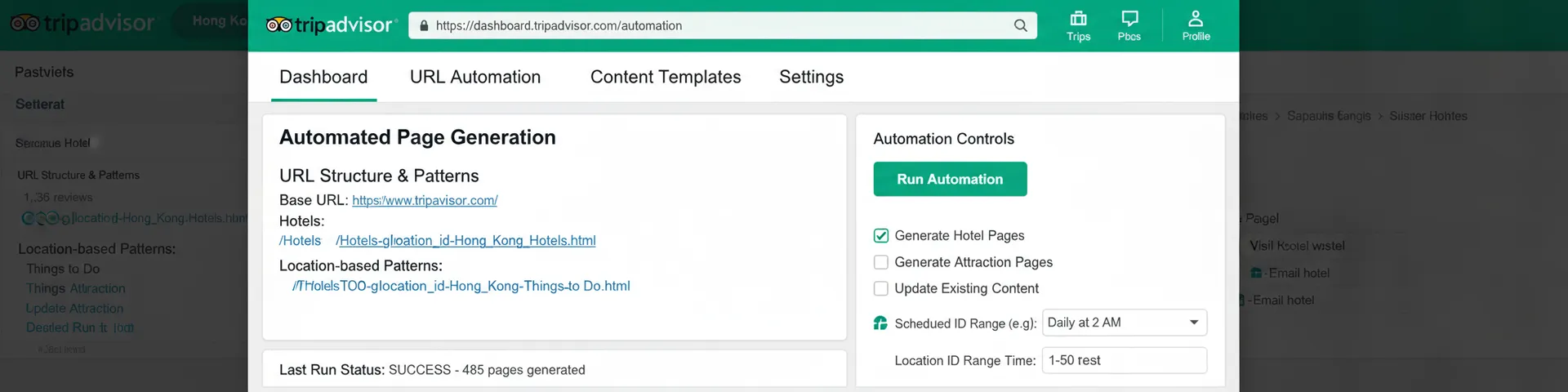
TripAdvisor’s programmatic SEO foundation relies on systematic URL patterns that automatically generate pages for every location and business type combination. Their URL architecture follows predictable templates that scale across millions of destinations worldwide.
The core patterns include:
- Hotels:
/Hotels-g{location_id}-{location_name}-Hotels.html - Restaurants:
/Restaurants-g{location_id}-{location_name}.html - Attractions:
/Attractions-g{location_id}-Activities-{location_name}.html - Reviews:
/Hotel_Review-g{location_id}-d{hotel_id}-Reviews-{hotel_name}-{city_state_country}.html
Each pattern leverages TripAdvisor’s location database, where every destination receives a unique identifier (location_id) that becomes the foundation for generating targeted pages. For example, New York City’s identifier “g60763” appears in URLs like /Hotels-g60763-New_York_City_New_York-Hotels.html.
This systematic approach allows TripAdvisor to automatically create pages for new locations as they’re added to their database, ensuring comprehensive coverage of global travel destinations without manual page creation.
How Does User-Generated Content Power Their Automated Page Creation?
TripAdvisor’s programmatic SEO engine transforms millions of user reviews and ratings into structured, SEO-optimized content. Their system automatically aggregates user-generated content to populate template-based pages with unique, valuable information for each location.
Traffic Impact: With 68.28% of desktop traffic coming from organic search, TripAdvisor’s user-generated content strategy directly drives their dominant search presence across travel-related queries.
Each programmatically generated page includes:
- Aggregated star ratings from thousands of user reviews
- Popular times and seasonal visit data
- User-uploaded photos organized by location and business type
- Review excerpts highlighting key traveler insights
- Dynamic pricing and availability information
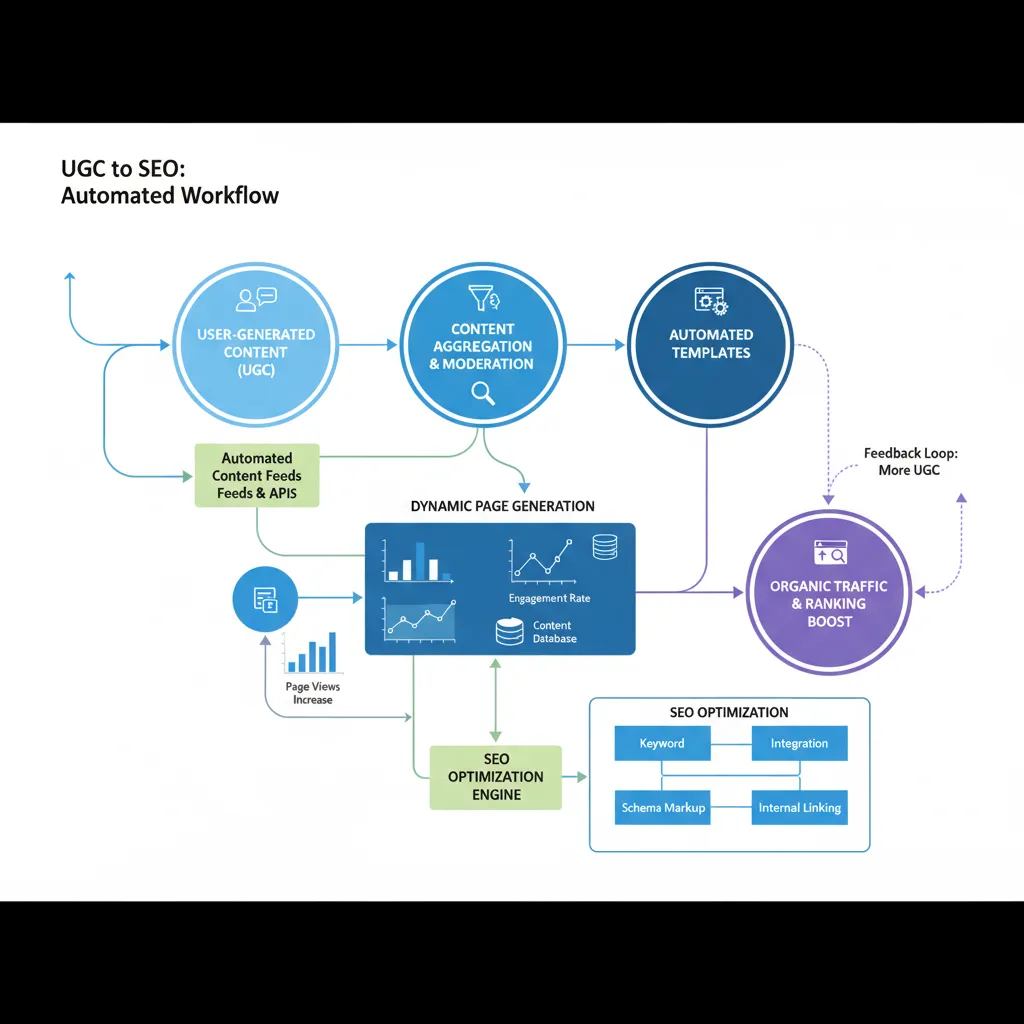
The system continuously updates these pages as new reviews are submitted, ensuring fresh content that search engines favor. This creates a self-reinforcing cycle where more user engagement generates better search visibility, which attracts more users and reviews.
What Data Sources Enable TripAdvisor’s Massive Scale?
TripAdvisor’s programmatic SEO success relies on multiple integrated data sources that feed their automated page generation system. Their Content API provides structured access to location data, enabling both internal page generation and external partner integrations.
| Data Source | Content Type | Scale Impact |
|---|---|---|
| Location Database | Unique IDs for 1M+ destinations | Enables systematic URL patterns |
| User Reviews | 900M+ travel reviews | Powers unique page content |
| Business Listings | Hotels, restaurants, attractions | Creates comprehensive coverage |
| Pricing Data | Real-time availability/rates | Drives commercial intent pages |
The location mapping system assigns unique identifiers to every destination, from major cities to small neighborhoods. This standardized approach allows TripAdvisor to automatically generate pages for any location where they have data, creating comprehensive search coverage.
Their business model leverages this scale through advertising revenue and booking commissions. With over $1.84 billion in annual revenue, the programmatic SEO strategy directly supports their monetization through increased organic visibility.
How Can You Implement TripAdvisor’s Programmatic SEO Approach?
TripAdvisor’s programmatic SEO methodology can be adapted for other location-based or data-rich businesses. The key lies in identifying systematic patterns in your data that can generate unique, valuable pages at scale.
Implementation Strategy: Start with a database of structured information (locations, products, services), create URL templates that scale across your data, and build automated systems to populate content templates with unique information for each combination.
Essential implementation steps include:
- Data Structure: Organize your content database with unique identifiers for each entity
- URL Patterns: Design scalable URL templates that incorporate your key variables
- Content Templates: Create page templates that automatically populate with database information
- Quality Control: Implement systems to ensure each generated page provides unique value
- Technical Infrastructure: Build systems that can handle massive page generation and updates
The success of this approach depends on having substantial, structured data that provides genuine value to users. TripAdvisor succeeds because their user-generated content creates authentic, helpful information for each location and business combination.
What Makes TripAdvisor’s Programmatic SEO Strategy So Effective?
TripAdvisor’s programmatic SEO success demonstrates the power of combining systematic automation with valuable user-generated content. Their ability to generate 226 million monthly organic visits through 75+ million indexed pages proves that programmatic SEO can scale beyond simple keyword insertion to create genuinely useful resources.
The key factors driving their success include:
- Massive Data Foundation: Leveraging 900+ million user reviews across global destinations
- Systematic URL Architecture: Predictable patterns that scale across any location or business type
- Continuous Content Optimization: Fresh user-generated content that keeps pages relevant and valuable
- Technical Infrastructure: Robust systems that handle millions of automated page updates
Their approach works because it solves real user problems at scale. When someone searches for travel information, TripAdvisor’s programmatically generated pages provide comprehensive, current information backed by authentic user experiences.
For businesses considering programmatic SEO, TripAdvisor’s model shows that success requires substantial structured data, systematic templates, and ongoing content that provides genuine value to users searching for specific information.