
How Did a Design Platform Transform Search Intent into $40 Billion in Value?
When Canva announced its $40 billion valuation in September 2021, few realized that behind this astronomical growth was one of the most sophisticated programmatic SEO strategies ever executed. Founded in 2013 by Melanie Perkins, Cliff Obrecht, and Cameron Adams, Canva didn’t just create a design tool—they engineered an SEO machine that generates over 270 million monthly organic visitors.
The secret? Canva discovered that people don’t just search for “design tools.” They search for specific solutions: “create a business card,” “wedding invitation template,” or “Instagram story maker.” By systematically mapping every possible design intent to automated landing pages, Canva transformed search intent behavior into a scalable acquisition engine.
Key Insight: Canva’s programmatic SEO success stems from understanding that 92% of their traffic comes from just 1.3% of their pages—the ones that perfectly match user intent with immediate design solutions.
What URL Patterns Power Canva’s Traffic Dominance?
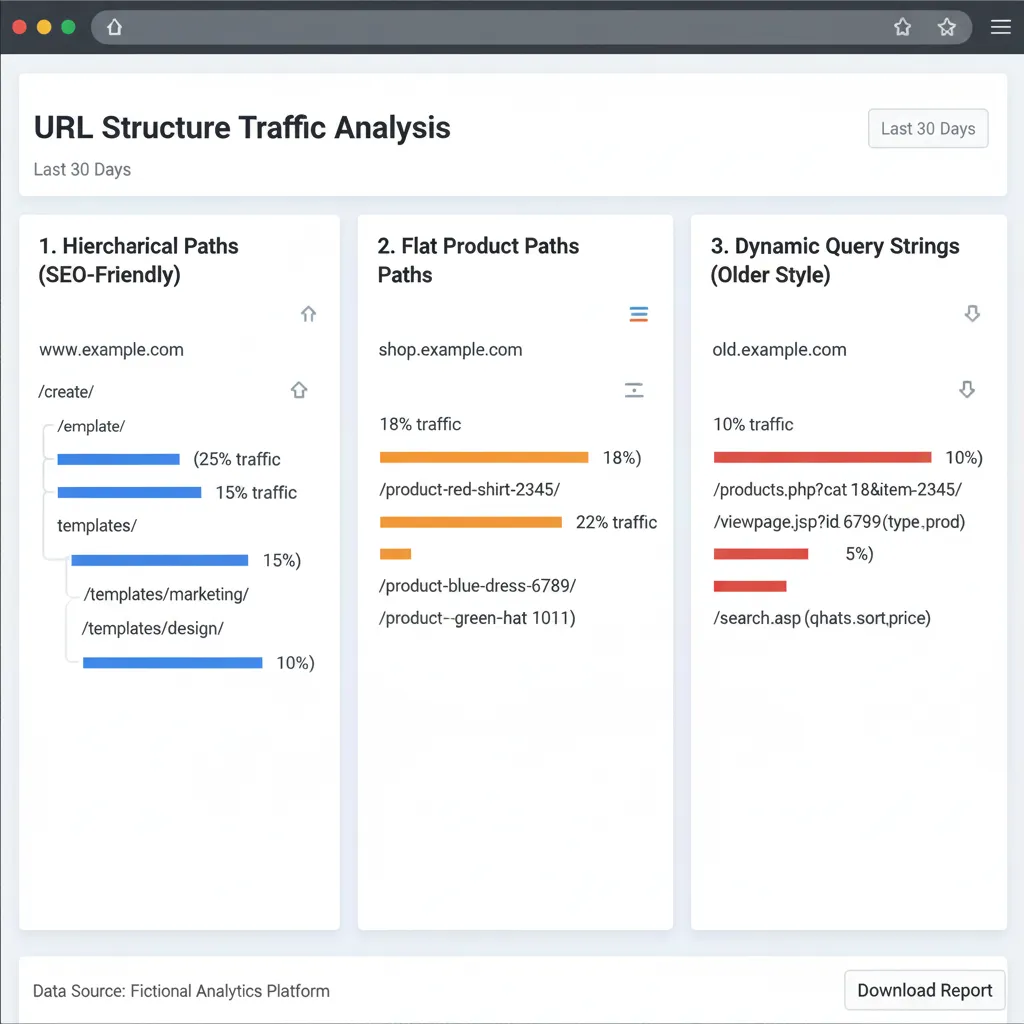
Canva’s programmatic SEO architecture revolves around three core URL patterns that systematically capture design intent at every stage of the user journey:
1. Create Pages (/create/{design-type}/) These pages target high-intent keywords where users want to immediately start designing. Examples include:
- canva.com/create/logos/
- canva.com/create/business-cards/
- canva.com/create/posters/
2. Template Discovery Pages (/templates/s/{category}/) These pages cater to users browsing for inspiration and ideas:
- canva.com/templates/s/creative/
- canva.com/templates/s/professional/
- canva.com/templates/s/business/
3. Subcategory Pages (/create/{design-type}/{sub-category}/) These target ultra-specific long-tail keywords:
- canva.com/create/logos/badges/
- canva.com/create/posters/cricket/
- canva.com/create/invitations/wedding/
According to analysis by WithDaydream, these URL patterns create “a massive longtail and web of interlinked pages that help Canva rank higher on search engines.” Each pattern serves a distinct user intent while feeding into Canva’s conversion funnel.
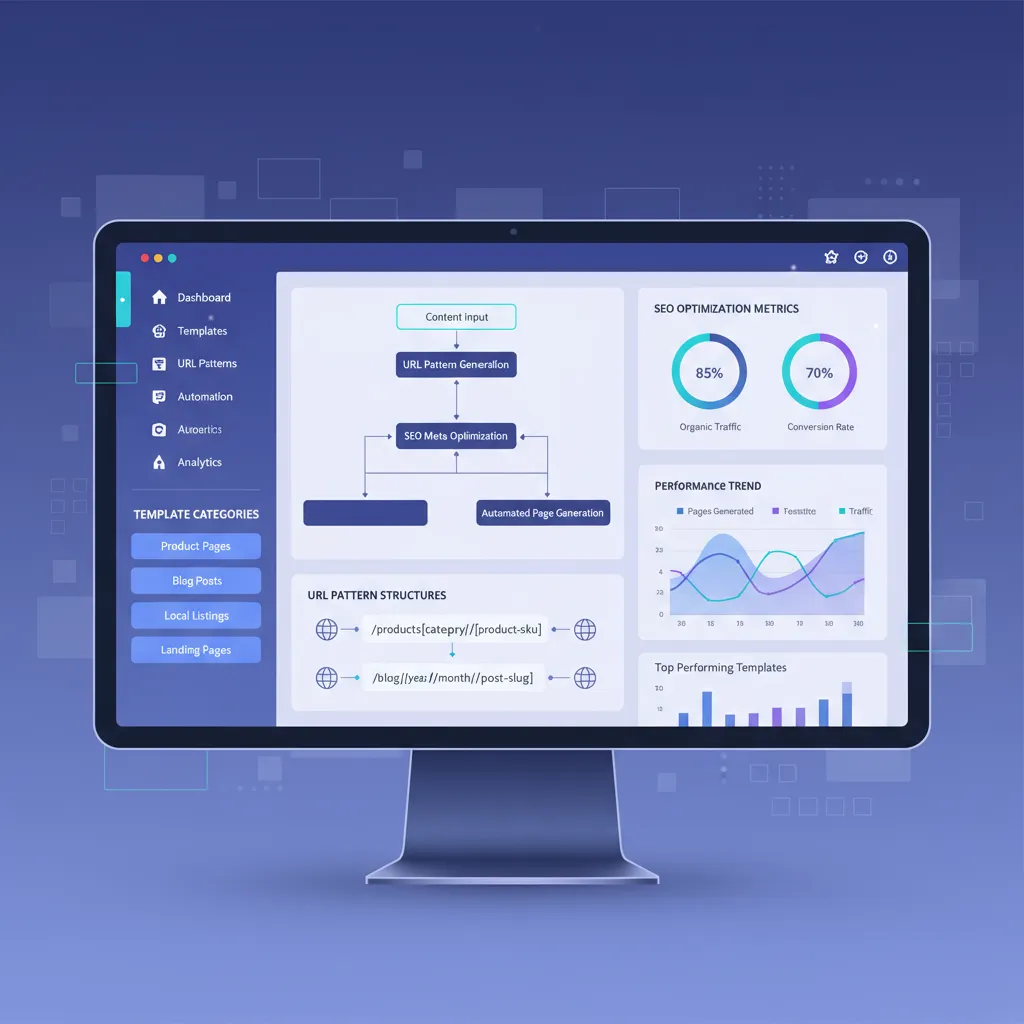
How Does Canva’s Template Automation System Work?
Canva’s programmatic SEO success relies on sophisticated template automation that generates thousands of pages without manual intervention. Here’s how their system operates:
| Component | Function | SEO Impact |
|---|---|---|
| Template Database | 500,000+ design templates | Enables automated page generation |
| Keyword Engine | Maps search intent to templates | Targets 5.5M+ keywords |
| URL Generator | Creates systematic URL patterns | Improves crawlability and indexing |
| Content Templates | Standardized page structures | Ensures consistent user experience |
The automation process begins with comprehensive keyword research. Canva’s team analyzes “all the possible keywords that the target audience uses to search for design tools and use cases” that align with their existing features.
Once keywords are identified, Canva’s system automatically generates landing pages by:
- Pulling relevant templates from their database
- Inserting targeted keywords into meta tags and headings
- Creating category-specific content blocks
- Generating internal linking structures
- Optimizing images with alt text and file names
This automation enables Canva to create thousands of SEO-optimized pages while maintaining quality and relevance across their entire template ecosystem.
What Makes Canva’s Product-Led SEO Strategy So Effective?
Unlike traditional content marketing, Canva’s approach integrates their actual product directly into SEO landing pages. This product-led SEO strategy transforms organic traffic into immediate user engagement.
The Integration Approach: When users land on a Canva SEO page, they don’t just read about design—they can immediately start creating. Each landing page includes:
- Ready-to-use design templates
- Embedded design tools
- One-click editing capabilities
- Instant preview functionality
Conversion Power: Users searching for “create a poster” land on a page where they can immediately design a poster, not just read about poster design. This direct product integration dramatically improves conversion rates.
The Freemium Conversion Model: Canva’s SEO pages seamlessly funnel users into their freemium model. Users can start designing immediately with basic features, then upgrade for premium templates and advanced functionality. This approach creates a frictionless path from search intent to product adoption.
The strategy works because it aligns perfectly with user expectations. When someone searches for “business card maker,” they want to make a business card—not read a blog post about business card design principles.
How Did This Strategy Drive Canva’s $40 Billion Valuation?
The financial impact of Canva’s programmatic SEO strategy extends far beyond traffic numbers. By systematically capturing design intent at scale, Canva built a user acquisition engine that directly contributed to their extraordinary valuation growth.
Traffic and Revenue Correlation:
- 270 million monthly organic visitors
- Over 5.5 million keyword rankings
- Estimated $100+ million in organic traffic value
- Direct conversion to 100+ million monthly active users
The Valuation Timeline: Canva’s strategic SEO implementation coincided with explosive valuation growth:
- 2018: Achieved unicorn status ($1 billion)
- 2020: Reached $6 billion valuation
- 2021: Peaked at $40 billion valuation
Strategic Advantage: Programmatic SEO created a sustainable competitive moat. Competitors can’t easily replicate Canva’s template database, keyword coverage, or established domain authority.
The Network Effect: As more users create designs on Canva, they generate more templates and use cases, which creates more keyword opportunities for SEO pages. This creates a self-reinforcing growth loop where product usage directly feeds SEO expansion.
The strategy’s success lies in its scalability—Canva can enter new design categories or geographic markets by simply extending their programmatic SEO framework to new keyword sets and templates.

What Can Other Companies Learn from Canva’s Programmatic SEO Success?
Canva’s journey from startup to $40 billion unicorn demonstrates the transformative power of programmatic SEO when executed with precision and scale. Their success offers actionable insights for companies looking to replicate this approach.
Key Implementation Principles:
The foundation of Canva’s strategy rests on understanding user intent at a granular level. Rather than targeting broad keywords, they mapped specific design needs to automated solutions. This approach works because it addresses real user problems with immediate, practical solutions.
Scalability Requirements: Successful programmatic SEO demands robust technical infrastructure. Companies need content management systems capable of generating thousands of pages, keyword research tools for intent mapping, and automation workflows that maintain quality at scale.
The Product Integration Advantage: Canva’s biggest differentiator was integrating their actual product into SEO pages. This creates immediate value for users while dramatically improving conversion rates compared to traditional content marketing approaches.
For companies considering programmatic SEO, Canva’s model shows that success requires more than just generating pages—it demands a systematic approach to understanding user intent, delivering immediate value, and building sustainable competitive advantages through scale and automation.