
How Did a Scottish Travel Startup Become the World’s Leading Flight Search Engine?
In 2003, three university friends in Edinburgh launched a simple flight comparison website from their dorm room. Today, Skyscanner has grown to serve over 100 million monthly users across 52 countries, making it one of the world’s most visited travel platforms.
The secret behind Skyscanner’s explosive growth isn’t just their user-friendly interface or comprehensive flight data—it’s their masterful implementation of programmatic SEO. By automatically generating millions of destination-specific landing pages, Skyscanner has captured an enormous share of organic search traffic for flight-related queries.
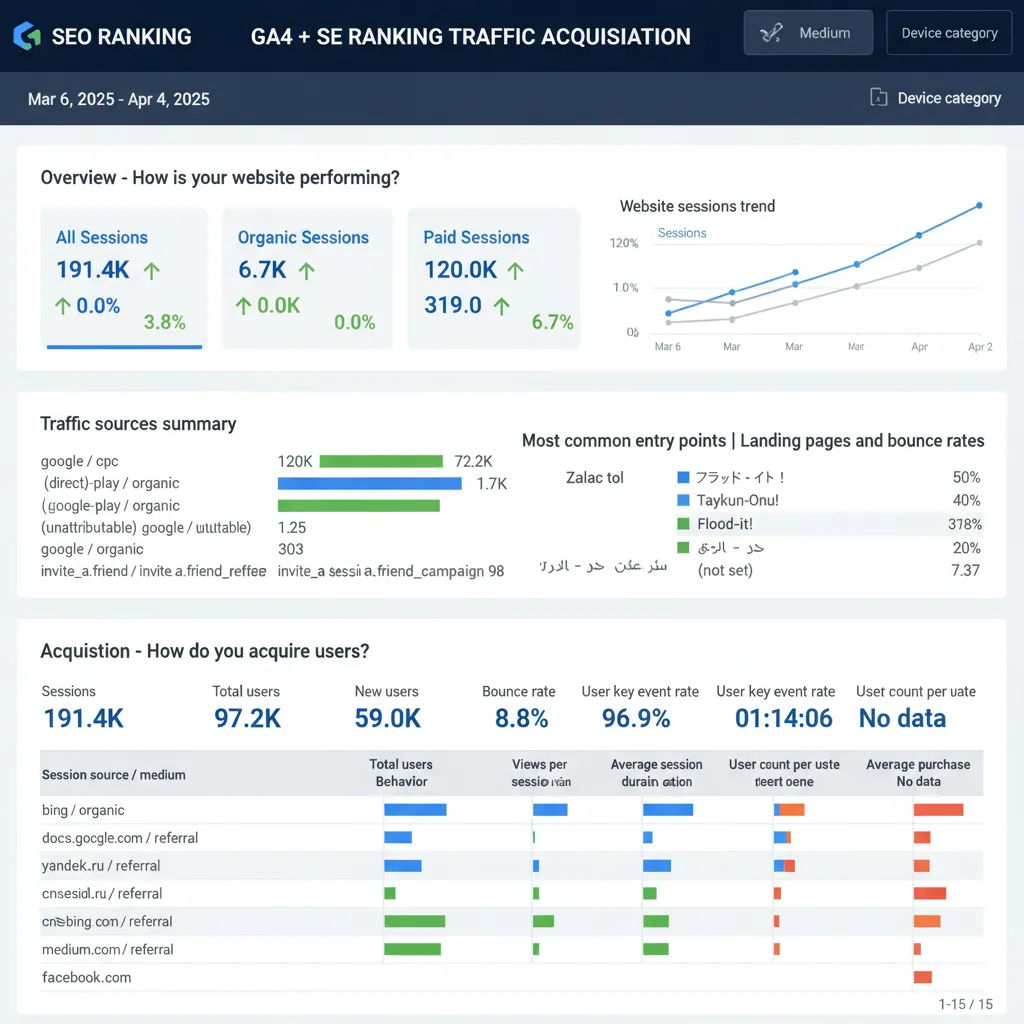
Organic search drives 32.25% of Skyscanner’s total traffic, making it their second-largest traffic source after direct visits. This represents millions of travelers discovering flights through search engines every month, translating directly into bookings and revenue.
Key Insight: Skyscanner’s programmatic SEO strategy targets the long tail of flight searches by creating unique pages for every possible route combination, capturing traffic that competitors miss.
What URL Patterns Does Skyscanner Use to Dominate Flight Searches?
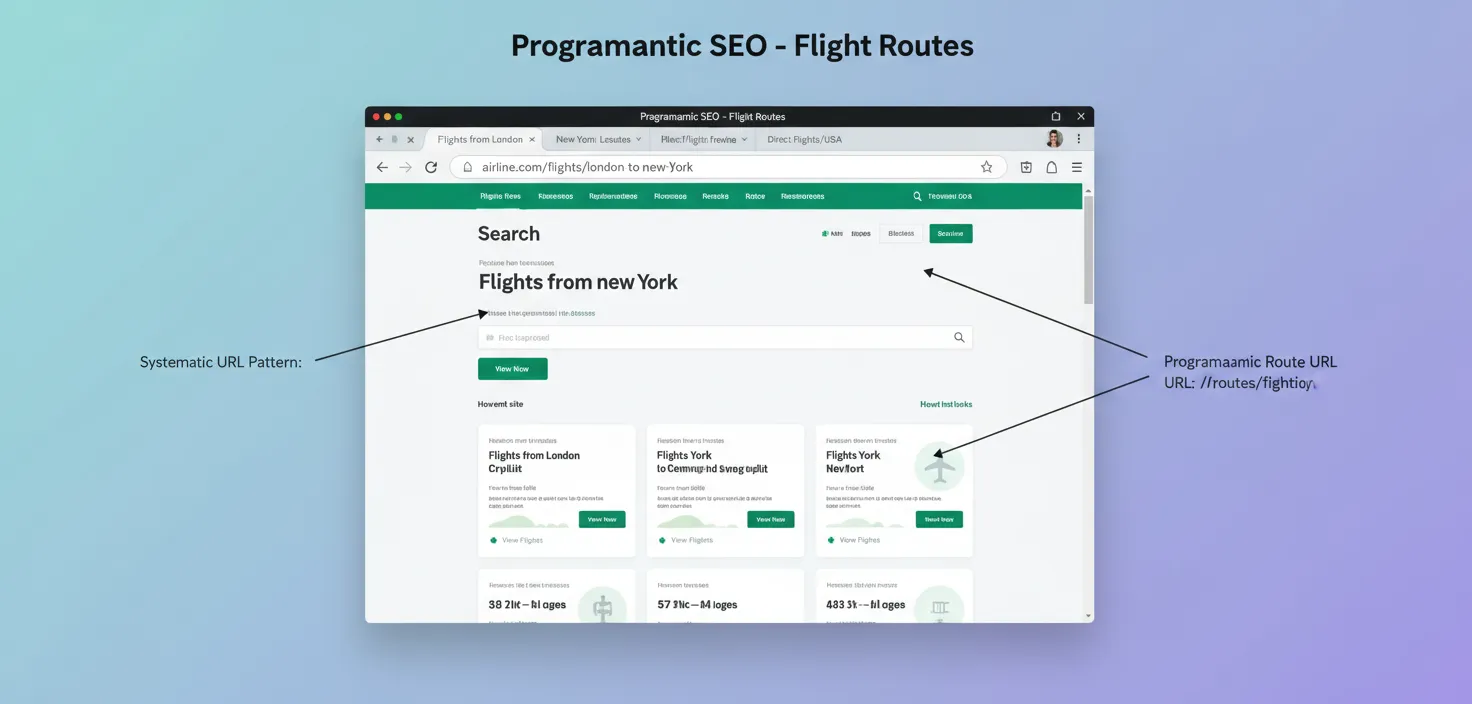
Skyscanner’s programmatic SEO success stems from their systematic approach to URL structure and page generation. The company has developed four distinct URL patterns that cover every conceivable flight search scenario:
Primary URL Patterns:
/flights-from/{location-code}/cheap-flights-from-{location-name}.html/flights-to/{location-code}/cheap-flights-to-{location-name}.html/routes/{origin-code}/{destination-code}/{origin-name}-to-{destination-name}.html/routes/{destination-code}/routes-to-{destination-name}.html
These patterns allow Skyscanner to create millions of unique pages. For example, they generate separate pages for “flights from Orlando International Airport” and “New York to London Heathrow,” each optimized for specific search queries.
The genius lies in the scalability: with thousands of airports worldwide, Skyscanner can automatically generate pages for every possible origin-destination combination. This creates an extensive network of landing pages that capture both broad searches (“flights to Australia”) and highly specific queries (“Orlando to Heathrow flights”).
Each URL pattern serves a different search intent:
- Departure-focused pages target users searching from specific locations
- Destination-focused pages capture travelers researching trips to particular places
- Route-specific pages serve users with defined origin-destination pairs
Implementation Tip: Skyscanner ensures each programmatically generated page offers unique value by incorporating real-time pricing data, route-specific insights, and location-based travel information rather than generic content.
How Does Skyscanner Generate Content at Scale for Millions of Pages?
Creating content for millions of flight route combinations requires sophisticated automation and data integration. Skyscanner leverages their vast database of flight information, airport codes, and travel data to populate dynamic page templates.
Content Generation Process:
- Data Collection: Skyscanner maintains real-time connections with over 1,200 travel providers, gathering flight schedules, prices, and route availability
- Template Design: Standardized page templates include meta titles, descriptions, and content blocks optimized for search engines
- Dynamic Population: Automated systems populate templates with location-specific data, pricing information, and relevant travel details
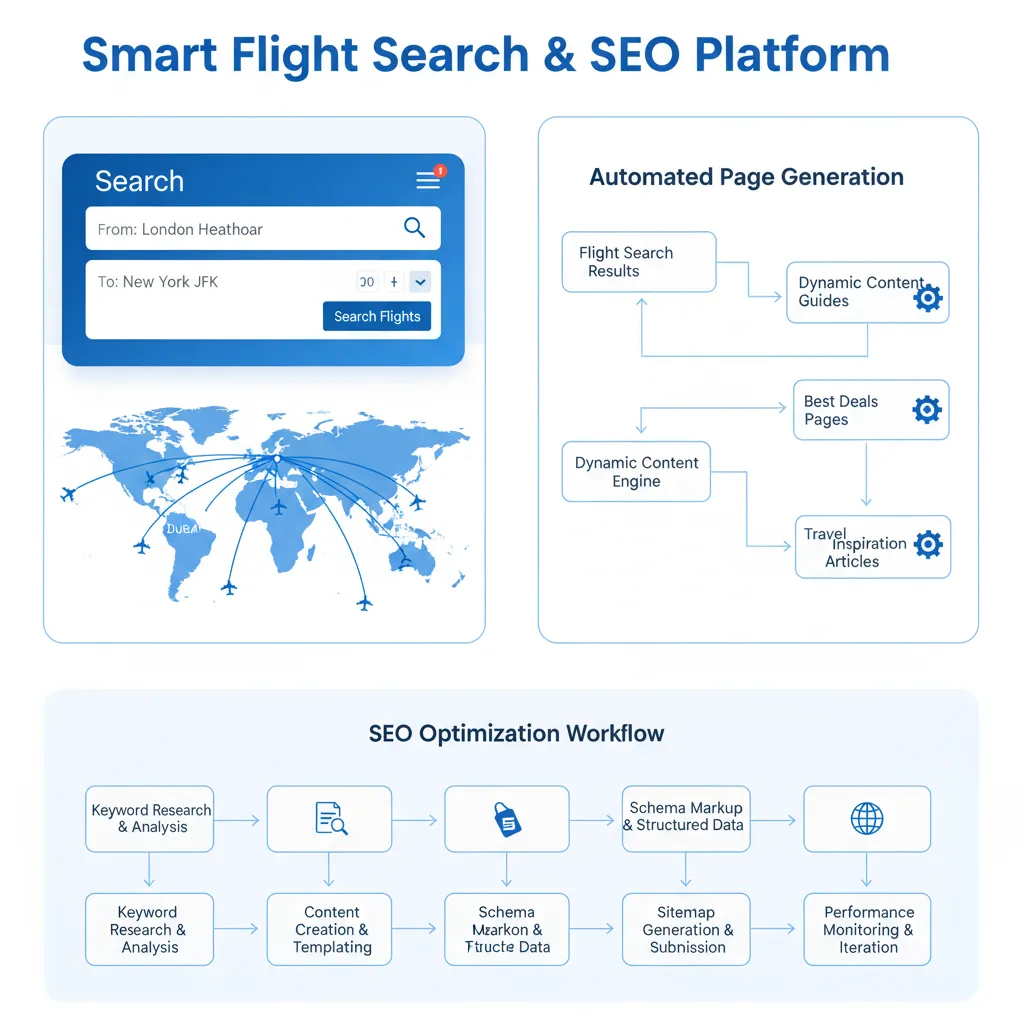
- SEO Optimization: Each page receives unique meta tags, H1 headings, and structured data markup
The content strategy focuses on providing genuine value while maintaining SEO effectiveness. Pages include practical information like average flight times, popular airlines for specific routes, and seasonal pricing trends.
What Technical Infrastructure Powers Skyscanner’s Programmatic SEO?
Skyscanner’s technical implementation demonstrates how to scale programmatic SEO without compromising site performance or user experience. Their infrastructure handles millions of pages while maintaining fast load times and accurate data.
Technical Architecture:
| Component | Implementation | Purpose |
|---|---|---|
| Page Generation | Automated templates with dynamic data | Scale content creation |
| Database Integration | Real-time flight data feeds | Ensure accuracy |
| Caching Strategy | Multi-layer content delivery | Optimize performance |
| Mobile Optimization | Responsive design system | Maximize accessibility |
The platform uses sophisticated caching mechanisms to serve millions of pages efficiently. Static elements like page structure and navigation are cached, while dynamic pricing data refreshes regularly to maintain accuracy.
Skyscanner’s mobile-first approach ensures all programmatically generated pages perform well across devices. With over 100 million app downloads, mobile optimization is crucial for capturing search traffic that converts to bookings.
Technical Insight: Server infrastructure capable of handling massive page volumes requires efficient database queries and CDN implementation for global content delivery with automated monitoring to ensure page quality and data accuracy.
What Results Has Skyscanner Achieved Through Programmatic SEO?
The measurable impact of Skyscanner’s programmatic SEO strategy demonstrates the power of systematic content generation at scale. Their approach has delivered remarkable business results across multiple metrics.
Traffic and User Growth: Skyscanner has grown to serve over 100 million peak monthly active users, with organic search contributing significantly to this growth. The company’s ability to rank for millions of flight-related keywords has made them the go-to destination for travel planning.
Revenue Impact: Skyscanner’s revenue increased from £223.1 million to £271.2 million, with much of this growth attributed to increased organic traffic and user acquisition through search engines.
Search Engine Dominance: The company now ranks for countless flight route combinations, often appearing in top positions for both competitive and long-tail keywords. This comprehensive search presence has established Skyscanner as a market leader in travel comparison.
Competitive Positioning: By capturing the long tail of flight searches through programmatic content, Skyscanner has built barriers to entry that are difficult for competitors to replicate. The scale and comprehensiveness of their page coverage makes it challenging for new entrants to compete for search visibility.
How Can You Implement Skyscanner’s Programmatic SEO Strategy?
Skyscanner’s journey from a university project to serving 100 million monthly users demonstrates the transformative power of programmatic SEO when executed systematically. Their success provides a blueprint for businesses looking to scale organic traffic through automated content generation.
The key lessons from Skyscanner’s approach are clear: success requires comprehensive data sources, systematic URL structuring, and technical infrastructure capable of supporting millions of pages. Most importantly, the content must provide genuine value to users while being optimized for search engines.
For businesses considering programmatic SEO, start by identifying your equivalent of flight routes—the core data combinations that your audience searches for. Whether you’re in real estate, e-commerce, or professional services, there are likely systematic ways to create valuable, unique pages at scale.
Skyscanner’s achievement of capturing 32% of their traffic through organic search while serving over 100 million users monthly proves that programmatic SEO isn’t just a traffic generation tactic—it’s a sustainable business growth strategy that can define market leadership in competitive industries.