

How Did a Simple Spreadsheet Evolve Into a 50K+ Visitor SEO Powerhouse?
When Pieter Levels launched Nomad List in 2014, it started as a basic crowdsourced spreadsheet listing the best cities for digital nomads. Today, this platform generates over 50,000 monthly organic visits through one of the most sophisticated programmatic SEO implementations in the travel space.
Nomad List’s success stems from understanding a fundamental truth about digital nomad search behavior: people don’t search for “best nomad platforms.” Instead, they search for hyper-specific queries like “cost of living Bangkok digital nomad” or “internet speed Lisbon remote work.”
Key Insight: Nomad List’s 25,500 indexed pages capture these long-tail keywords by automatically generating data-rich city pages that answer specific location-based questions for remote workers.
This case study examines how Pieter Levels transformed a simple idea into a multi-million dollar business using programmatic SEO to dominate the digital nomad niche.
What Makes Nomad List’s Programmatic SEO Strategy So Effective?
Nomad List’s programmatic approach centers on creating comprehensive city profiles that serve multiple search intents through different URL structure patterns. The platform uses six distinct page types to capture various stages of the nomad decision-making process:
- City overview pages (
/{city}) - General destination information - Cost of living pages (
/cost-of-living/in/{city}) - Detailed expense breakdowns - Digital nomad guides (
/digital-nomad-guide/{city}) - Location-specific advice - Pros and cons pages (
/pros-cons/{city}) - Balanced city assessments - Country pages (
/{country}) - Broader geographic targeting
Each page template pulls from the same core dataset but presents information differently based on user intent. A cost of living page emphasizes financial data, while a digital nomad guide focuses on practical advice like coworking spaces and visa requirements.
Strategic Advantage: By creating multiple page types for each location, Nomad List captures different search variations and user intents, significantly expanding their keyword coverage without duplicate content.
How Does Nomad List Structure Their Data for Maximum SEO Impact?
The foundation of Nomad List’s programmatic success lies in their comprehensive location database. According to their implementation analysis, each city page incorporates over 50 data points ranging from internet speeds to local safety ratings.
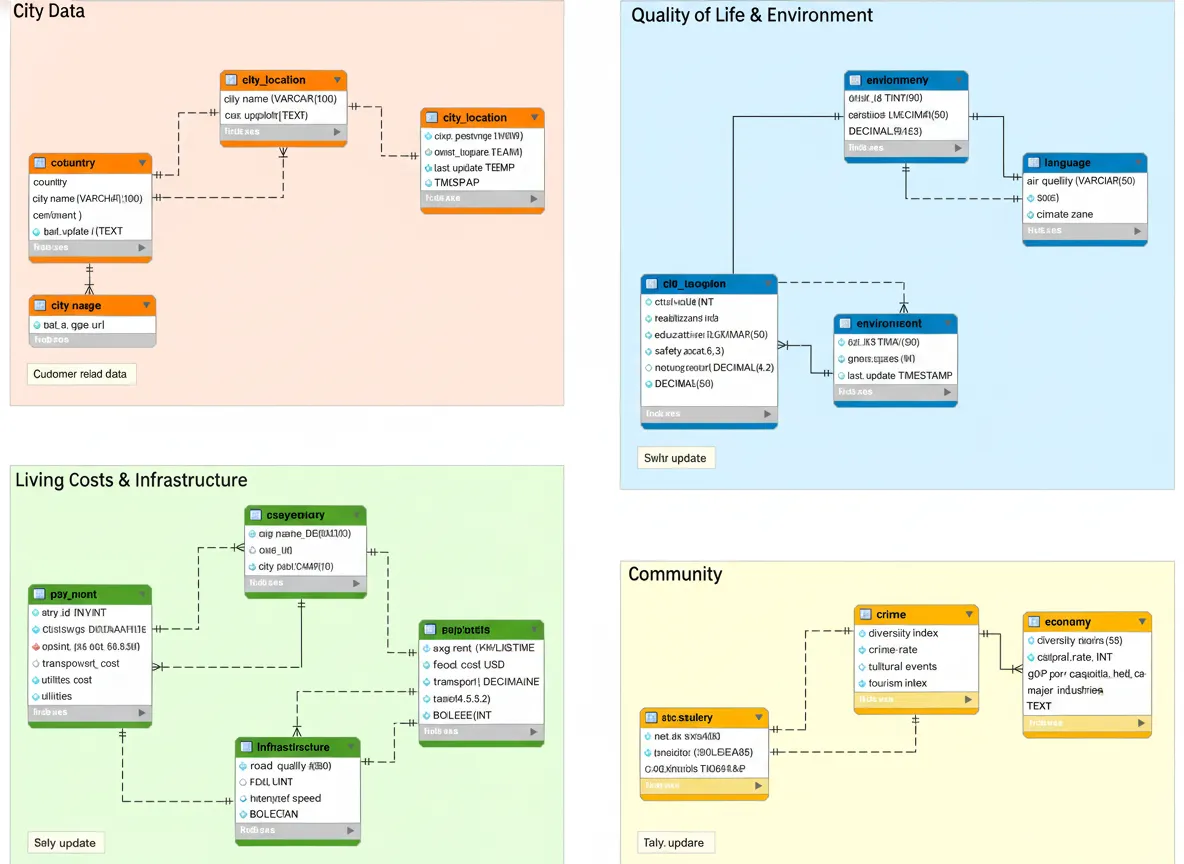
| Data Category | Key Metrics | SEO Value |
|---|---|---|
| Living Costs | Rent, food, transport prices | High-volume cost searches |
| Infrastructure | Internet speed, coworking spaces | Technical nomad queries |
| Quality of Life | Safety, weather, walkability | Lifestyle-focused searches |
| Community | Nomad population, events | Social connection searches |
This structured approach allows Nomad List to automatically generate content that answers specific questions like “How much does it cost to live in Mexico City as a digital nomad?” or “What’s the internet speed like in Bangkok for remote work?”
The data collection combines automated sources (weather APIs, cost indexes) with user-generated content from the nomad community. This hybrid approach ensures both scale and accuracy while maintaining fresh, relevant information that search engines favor.
What Technical Implementation Drives Nomad List’s Page Generation?
Nomad List’s technical architecture demonstrates how to scale programmatic SEO without sacrificing page quality. Each city page follows a consistent template structure while dynamically populating content based on location-specific data.
The platform’s URL structure strategically targets different keyword combinations:
- Primary pages capture broad terms (“Bangkok digital nomad”)
- Specialized pages target specific queries (“cost of living Bangkok”)
- Country and regional pages capture broader geographic searches
This multi-layered approach ensures Nomad List appears for various search patterns while maintaining topical relevance. The technical implementation likely involves database queries that pull relevant data points and populate pre-designed templates, creating thousands of unique pages without manual content optimization.
Implementation Insight: Nomad List’s success shows that programmatic SEO works best when each generated page provides genuine value through comprehensive, structured data rather than thin, repetitive content.
What Results Has This Strategy Delivered for Nomad List?
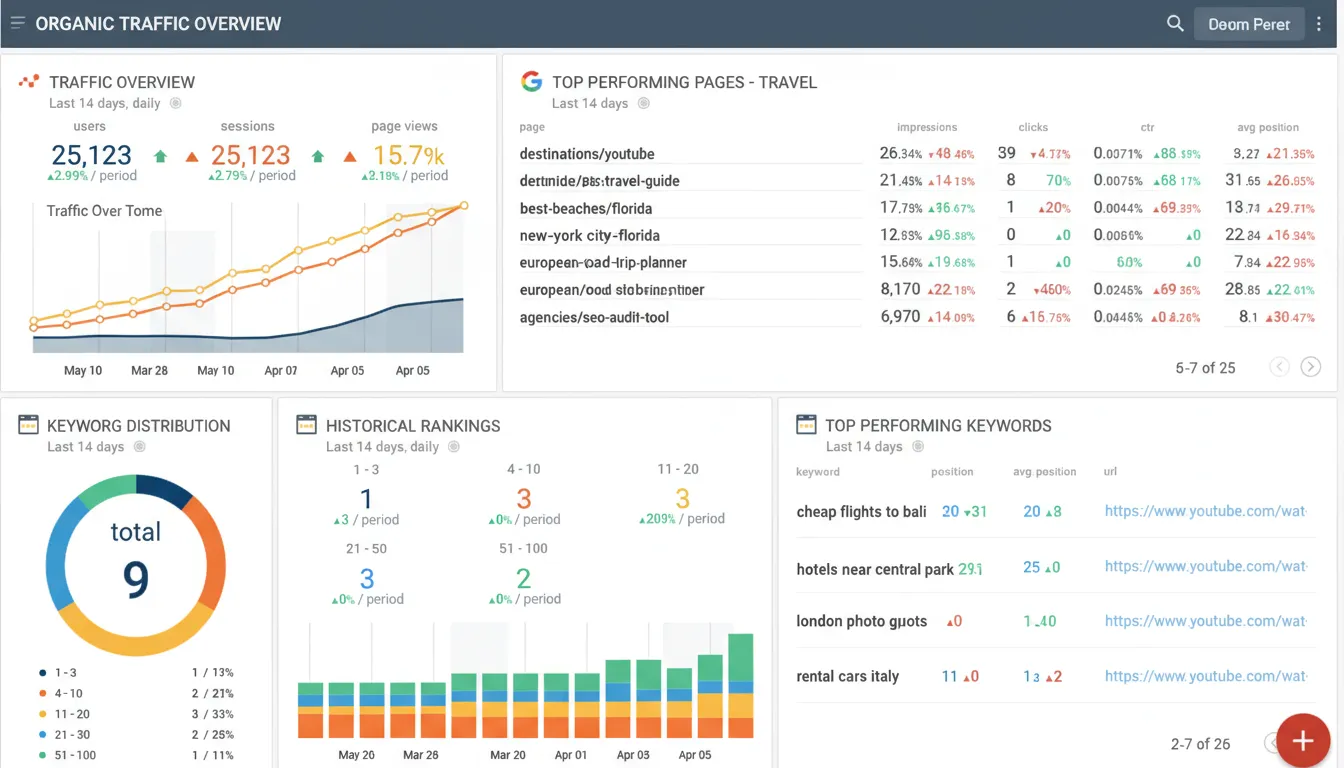
The results speak for themselves: Nomad List generates over 50,000 monthly organic visits with 49.53% of traffic coming from organic search according to traffic analysis. This represents a remarkable achievement for a bootstrapped platform in a competitive travel niche.
Key performance indicators include:
- 25,500+ indexed pages covering cities worldwide
- 50,000+ monthly organic visitors from search engines
- Strong long-tail keyword rankings for location-specific queries
- High user experience due to data-rich, actionable content
The financial impact has been equally impressive. Pieter Levels has built this into a multi-million dollar business generating substantial revenue through membership subscriptions and community features.
This success demonstrates that programmatic SEO can drive meaningful business outcomes when executed with a clear understanding of user needs and search behavior patterns.
What Can You Learn from Nomad List’s Programmatic SEO Success?
Nomad List’s journey from spreadsheet to SEO powerhouse offers several actionable insights for implementing programmatic SEO. The key lies in combining comprehensive data collection with user-focused page templates that genuinely serve search intent.
The most critical lesson is understanding your audience’s search patterns. Digital nomads search for specific, actionable information about locations, not generic travel content. By building pages that directly answer these hyper-specific queries, Nomad List created a sustainable competitive advantage.
Success in programmatic SEO requires three essential elements: structured data that scales, page templates that serve genuine user needs, and a technical implementation that maintains quality across thousands of pages. Nomad List’s approach proves that when these elements align, programmatic SEO becomes a powerful growth engine that continues delivering results over time.
FAQ
How many pages has Nomad List created through programmatic SEO?
Nomad List has generated over 25,500 indexed pages covering cities, countries, and regions worldwide. These pages span multiple categories including general city information, cost of living data, digital nomad guides, and pros/cons assessments.
What data sources does Nomad List use for their programmatic pages?
Nomad List combines automated data sources like weather APIs and cost indexes with user-generated content from their digital nomad community. This hybrid approach ensures both scale and accuracy across their location database.
How much organic traffic does Nomad List receive from their programmatic SEO strategy?
Nomad List generates over 50,000 monthly organic visits, with 49.53% of their total traffic coming from organic search according to traffic analysis tools.