AI Overviews are changing again. If you’re tracking your AI search visibility (need help? reach out to us here) the January 2026 update shifted how Google triggers, displays, and cites sources.
Here’s what we’re seeing and how to adapt.
The Growth We’re Tracking
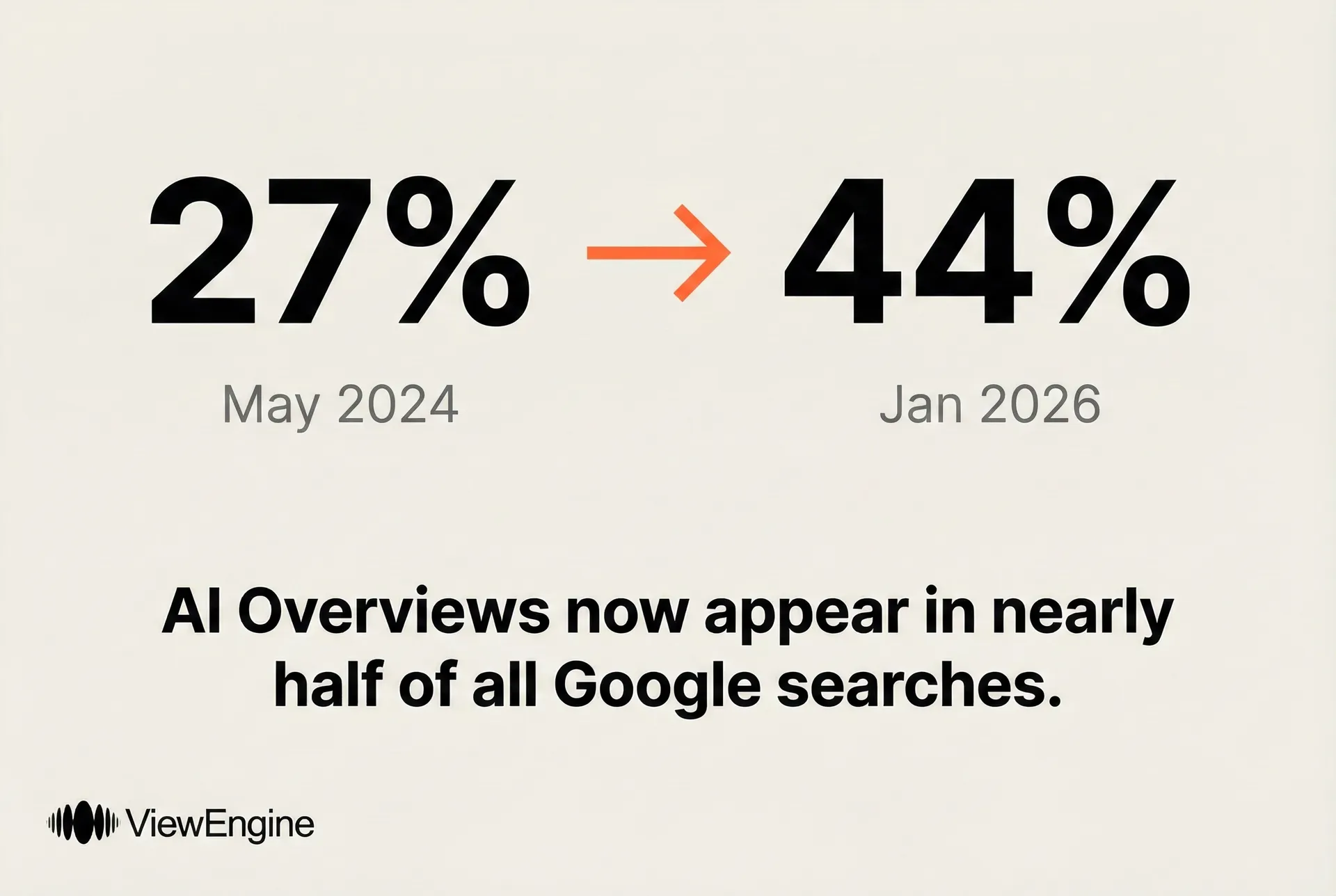
BrightEdge data shows AI Overview presence jumped from 26.6% of queries (May 2024) to 44.4% (September 2025). Nearly half of tracked queries now feature an AI-generated summary.
This isn’t a trend to monitor from the sidelines. With Google holding 90% of search market share, AI Overview optimization is now table stakes for enterprise SEO.
Three Changes That Matter
1. Smarter Trigger Logic
Google refined when AI Overviews appear:
- Informational queries: More likely to get comprehensive summaries
- Multi-step queries: Structured breakdowns with clear sections
- YMYL topics: More conservative answers, stronger citation requirements
What this means: Generic queries may skip AI treatment entirely, while complex research queries get prioritized.
Our recommendation: Focus optimization efforts on consideration-stage queries where AI Overviews add genuine value.
2. Citations Got Upgraded
The citation system changed significantly:
- Carousel-style citations with mini annotations (more context visible)
- Sources positioned closer to the answer body
- Larger clickable cards with preview information
If you’re getting cited, you’re more visible than before. Citation clicks increase 15-20% for clients who appear in AI Overviews.
3. Layout Reshuffled
AI summaries no longer lock into position zero. They now insert between organic results and verticals: video carousels, shopping results, local packs.
This reshapes click patterns entirely. In some query categories, users encounter organic results before the AI summary. Your traditional position tracking won’t tell the full story anymore.
What Gets Cited
Based on our AEO audits, content that earns citations consistently includes:
Structural elements:
- “Quick Answer” blocks at article top (liftable summaries)
- Comparison tables with explicit decision criteria
- Clear conclusions not buried in paragraphs
Trust signals:
- Schema markup (FAQ, HowTo, Article)
- Author credentials linked to expertise
- E-E-A-T signals throughout the content
The Adaptation Framework
For enterprise teams navigating this:
- Audit your AI visibility: Track which queries trigger AI Overviews in your space
- Structure for extraction: Write summaries that models can lift cleanly
- Build comparison content: Decision-stage pages with clear criteria tables
- Match vertical intents: Local, shopping, learning queries need specific structures
What This Means for Your Traffic
The fear of AI search destroying organic traffic is real but manageable. The January 2026 update actually increased citation visibility. Brands appearing in AI Overviews are getting more exposure, not less.
The playbook from 2020 won’t work in 2026. But the teams adapting to AI search now are building competitive moats their competitors can’t easily replicate.
Tracking AI Overview visibility for your brand? We’re helping enterprise teams map their AEO standings and develop their search strategy. → Let’s talk