
If 37% of consumers now bypass Google and go straight to AI tools like ChatGPT and Perplexity, your organic traffic is at risk. Unless you optimize for both. The data shows a “hybrid journey” is emerging: AI provides the first answer, traditional search confirms it. Brands not visible in AI summaries may never enter the consideration set.
The Shift Is Happening Now
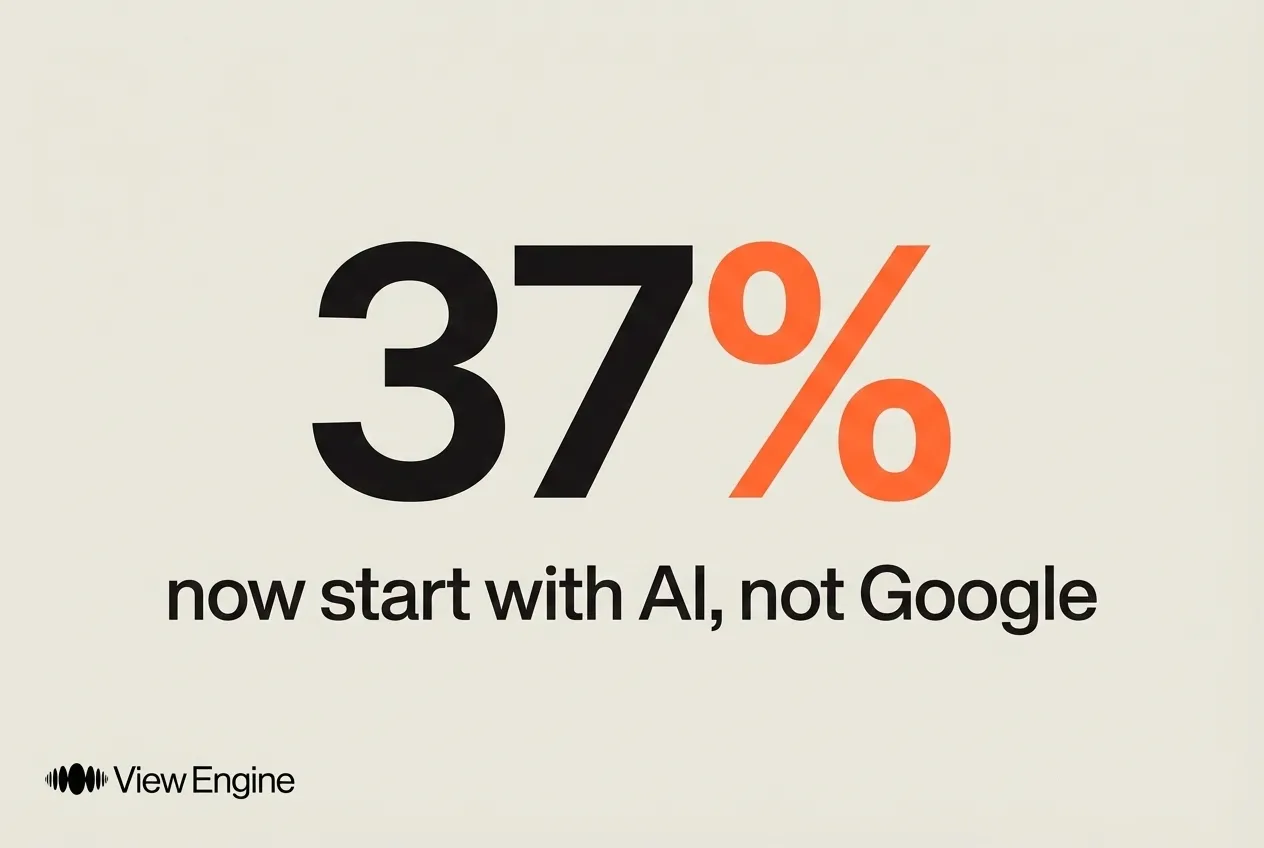
New research from Eight Oh Two reveals a fundamental change in how consumers discover information and brands:
- 37% of consumers now start their searches with AI tools instead of Google
- 60% say AI delivers better, clearer answers than traditional search
- 59% expect AI to become their main way of finding information by year’s end
This isn’t a future trend. It’s already here.
Why Consumers Are Leaving Traditional Search
The study identified clear frustrations driving this behavior:
| Frustration | % of Respondents |
|---|---|
| Clicking through too many links | 40% |
| Too many ads and sponsored results | 37% |
| Difficulty getting a straight answer | 33% |
| Repetitive or low-quality information | 28% |
AI wins when people want speed, simplicity, and relief from noise. Instead of scanning ads and blue links, users want one clear answer they can act on immediately.
AI Is Reshaping Brand Discovery
When someone asks an AI tool for recommendations, they get a short, curated list - often with explanations that highlight some brands and exclude others entirely.
The implications are significant:
- 47% of consumers say AI influences which brands they try
- 47% have used AI to help make a purchase decision
- 57% have used AI to find the best prices
- 54% have used AI to compare products
If your brand isn’t easy for AI to understand, summarize, or differentiate, you may never be considered.
The Hybrid Journey: AI First, Search Second
Despite the shift toward AI, traditional search isn’t dead - it’s repositioning.
The study found that 85% of consumers still double-check AI answers elsewhere. Traditional search remains preferred for:
- Product reviews and pricing
- News and recent events
- Images and videos
- Health and medical information
This creates a “hybrid journey” where AI provides the initial answer, and traditional search confirms it. Brands need consistency across both or risk losing credibility when users cross-check.
What This Means For Your SEO Strategy
1. You Need AI Visibility, Not Just Google Visibility
If 37% of your potential customers start with AI, your Google rankings alone won’t capture them. You need your brand to appear in AI-generated summaries and recommendations.
This requires:
- Clear, structured content that AI can easily parse
- Strong entity signals (who you are, what you do, why you’re credible)
- Content that directly answers questions (not just keyword optimization)
2. Consistency Across Both Channels Is Critical
Users cross-check. If your AI answer says one thing and your website says another, you lose trust. Ensure your key messages, differentiators, and claims are consistent across:
- Your website content
- Your structured data
- Third-party sources AI might reference
3. Speed of Adoption Matters
63% of consumers expect to use AI more this year. The brands that adapt now will build visibility while competitors are still debating whether this is real.
How ViewEngine Approaches AI Search Optimization
We’ve been tracking AI citation patterns across AI Overviews, ChatGPT, and Perplexity since these platforms emerged. Our approach:
- Audit AI visibility: Which AI platforms cite your brand? For which queries? How accurately?
- Optimize for summarization: Is your content structured so AI can extract and attribute key facts?
- Monitor the hybrid journey: Track how users move between AI and traditional search to find you
- Build entity authority: Strengthen the signals that help AI understand who you are
The Bottom Line
The 37% who start with AI today will be the majority tomorrow. Your organic strategy needs to account for both traditional search and AI-generated answers.
The question isn’t whether to optimize for AI search - it’s how quickly you can adapt before your competitors do.
Want to see where your brand stands in AI search? Reach out to us.