
How Did Atlassian Transform From a Developer Tool Into an SEO Powerhouse?
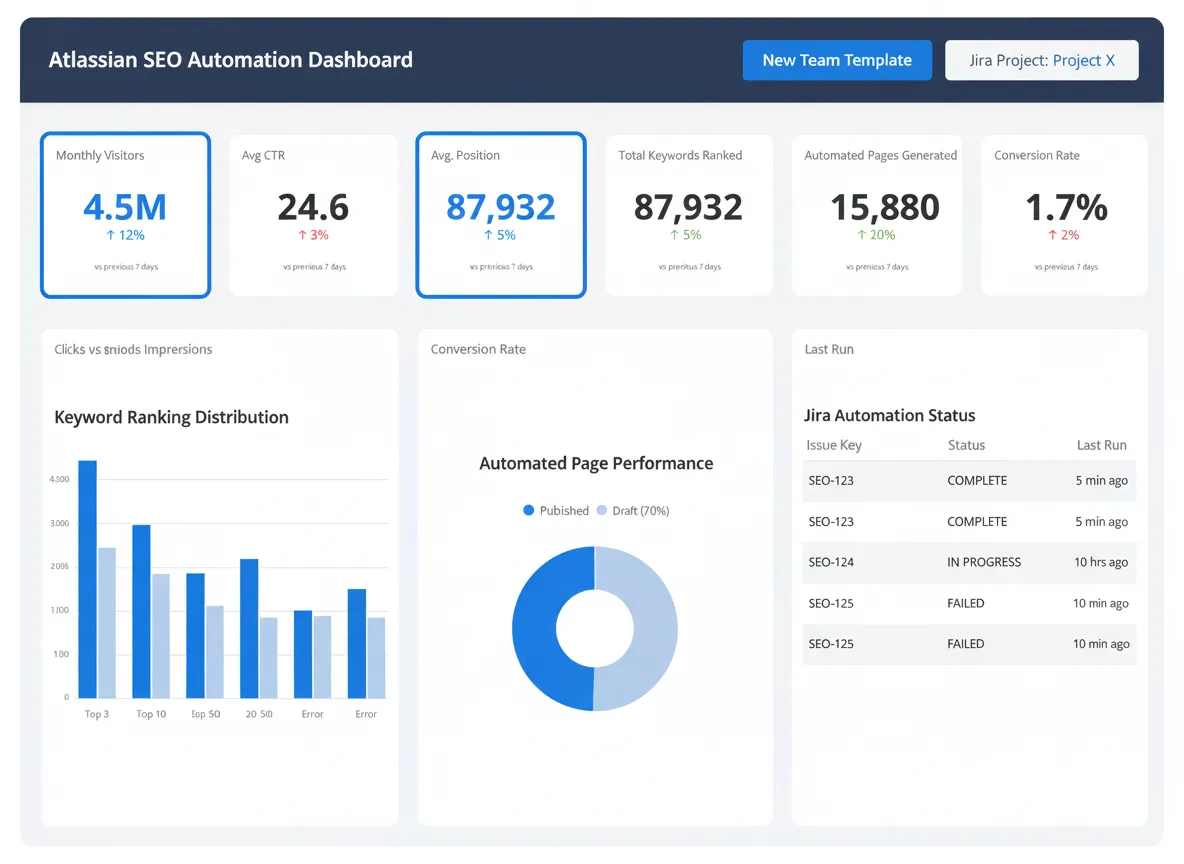
When you think of companies dominating search results, Atlassian might not be the first name that comes to mind. Yet this Australian software giant has quietly built one of the most sophisticated programmatic SEO operations in the enterprise space, attracting over 4.5 million monthly visitors and ranking for an impressive 766,000 keywords.
The secret lies in their methodical approach to content automation. Rather than manually creating thousands of pages, Atlassian developed a template-driven system that automatically generates targeted content for different teams, use cases, and industries. This strategy has enabled them to capture search traffic across virtually every business function imaginable.
Key Insight: Atlassian’s programmatic SEO success stems from understanding that enterprise buyers search for solutions specific to their role, industry, and use case—not just generic product information.
What URL Patterns Power Atlassian’s Content Automation?
Atlassian’s programmatic SEO strategy revolves around six core URL patterns that systematically target different search intents:
- /teams/{team-type}/ - Pages like atlassian.com/teams/marketing and atlassian.com/teams/legal
- /software/jira/templates/{category}/ - Template libraries such as atlassian.com/software/jira/templates/legal
- /software/jira/solutions/{use-case}/ - Solution-specific pages targeting specific business needs
- /software/confluence/templates/categories/{category}/ - Confluence template collections
- /industries/{industry}/ - Industry-specific landing pages
Each pattern serves a distinct search intent. The team pages capture role-based searches like “project management for marketing teams,” while template pages target users looking for ready-made solutions. This systematic approach ensures comprehensive coverage of enterprise search queries.
How Does Atlassian’s Template-Based Content Generation Work?
The foundation of Atlassian’s success lies in their sophisticated template system. Rather than creating unique content for each page, they’ve developed reusable frameworks that automatically populate with relevant information based on the target audience.
For their team-specific pages, Atlassian uses a consistent structure that includes:
- Role-specific pain points and challenges
- Tailored product recommendations
- Industry-relevant use cases and examples
- Team-specific templates and resources
Strategic Advantage: By automating content creation through templates, Atlassian can maintain consistency across thousands of pages while ensuring each one feels personalized to its target audience.
The Jira template library exemplifies this approach. Each template page follows the same structural framework but dynamically populates content based on the specific use case—whether it’s legal contract management or sales pipeline tracking.
What Results Has This Strategy Delivered for Atlassian?
The numbers speak for themselves. Atlassian’s programmatic SEO implementation has generated remarkable results that would be impossible to achieve through manual content creation.
| Metric | Result | Equivalent Ad Spend |
|---|---|---|
| Monthly Organic Visitors | 4.5M+ | $7.1M |
| Keywords Ranking | 766K | - |
| Organic Traffic Value | $7.1M/month | - |
This traffic represents an extraordinary return on investment. To achieve similar results through paid advertising would cost approximately $7.1 million monthly, making their organic strategy incredibly cost-effective.
Beyond traffic metrics, this approach has transformed Atlassian’s market positioning. They’ve evolved from being perceived as just developer tools to becoming a comprehensive enterprise platform that serves every business function.
How Can You Implement Atlassian’s Programmatic SEO Approach?
Replicating Atlassian’s success requires a systematic approach to content automation. The key is identifying scalable patterns within your target market and building templates that can serve multiple variations of user intent.
Start by analyzing your customer base and identifying common patterns:
- What teams or roles use your product?
- What industries do you serve?
- What specific use cases does your product solve?
- What templates or resources could benefit multiple customer segments?
Implementation Tip: Begin with one URL pattern and perfect the template before scaling. Atlassian likely started with team pages before expanding to templates and industry-specific content.
The technical implementation requires a content management system capable of dynamic page generation. You’ll need to create template frameworks that can populate with different data sets while maintaining consistent structure and quality.
Focus on creating genuinely valuable content rather than thin pages. Each generated page should provide specific value to its target audience, following Atlassian’s example of combining general frameworks with audience-specific insights.
What Makes Atlassian’s Programmatic SEO Strategy So Effective?
Atlassian’s success demonstrates that programmatic SEO isn’t just about creating more pages—it’s about systematically addressing every variation of customer intent within your market. Their template-based approach ensures scalability without sacrificing quality, while their strategic URL patterns capture traffic across the entire customer journey.
The key lesson is that successful programmatic SEO requires deep understanding of your audience segments and their specific needs. By building content automation around genuine customer value rather than just keyword targeting, Atlassian has created a sustainable competitive advantage that continues to drive millions of visitors monthly.
For enterprise software companies, Atlassian’s approach provides a proven blueprint for scaling content operations while maintaining relevance and authority in search results.
How many pages has Atlassian created using programmatic SEO?
While Atlassian hasn't disclosed exact numbers, their ranking for 766,000 keywords suggests they've created thousands of pages across their team, template, solution, and industry-specific URL patterns. Each pattern likely contains dozens to hundreds of variations.
What tools does Atlassian use for their programmatic SEO implementation?
Atlassian leverages their own Confluence platform for content management and likely uses custom development for dynamic page generation. Their template system appears to be built on structured content frameworks that can automatically populate with audience-specific information.
How does Atlassian avoid duplicate content issues with programmatic SEO?
Atlassian maintains content uniqueness by focusing each page on specific audience segments and use cases. Their team pages target different business functions, while their template pages address distinct workflow needs, ensuring each page serves a unique search intent.