
How Did a Simple Room-Sharing Idea Transform Into the World’s Largest Accommodation Platform?
In 2008, two roommates in San Francisco couldn’t afford their rent. Their solution? Rent out air mattresses in their apartment during a design conference. Fast forward to 2024, and Airbnb has achieved an $84 billion valuation, fundamentally reshaping how people travel and find accommodations worldwide.
The secret behind Airbnb’s meteoric rise wasn’t just innovative hospitality concepts—it was their strategic implementation of programmatic SEO that created over 1.1 million optimized pages, driving 15% of their total traffic through organic search.
Key Insight: Airbnb’s programmatic SEO strategy generated location-specific pages at unprecedented scale, targeting millions of long-tail keywords that traditional competitors couldn’t match manually.
What Exactly Is Programmatic SEO and How Did Airbnb Master It?
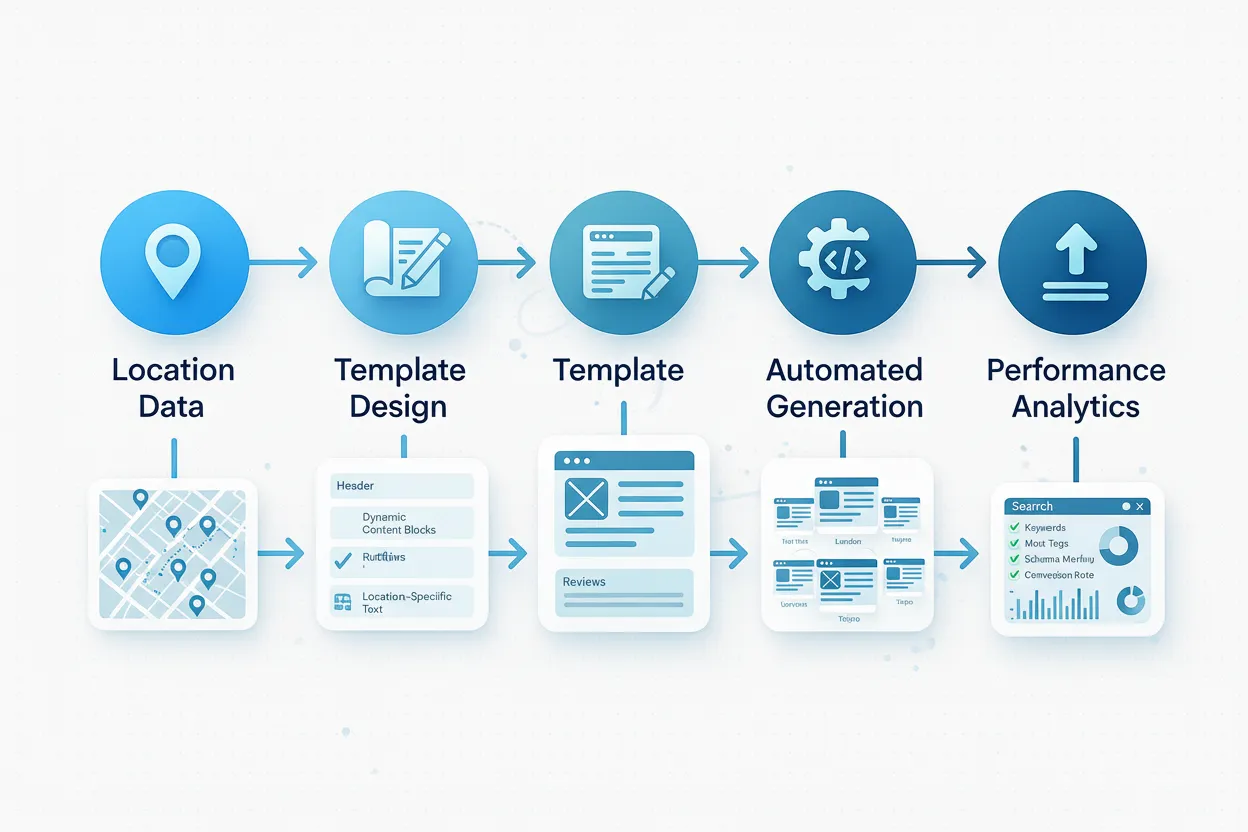
Programmatic SEO involves using automation and data to create thousands of SEO-optimized pages systematically. Unlike traditional SEO that focuses on manually crafting individual pages, programmatic SEO leverages templates, databases, and algorithms to generate content at massive scale.
Airbnb identified a crucial opportunity: travelers consistently search for accommodations using location-specific queries like “vacation rentals in Miami” or “apartments in Brooklyn.” Rather than manually creating pages for every possible combination, they built a system that automatically generates optimized landing pages for:
- City-state combinations:
/new-york-ny/stays - Property types by location:
/miami-fl/stays/houses - Features by location:
/new-york-ny/stays/apartments - Broader geographic areas:
/united-states/stays/cabins
This approach allowed them to target millions of location-based search queries that their competitors couldn’t feasibly address manually.
How Did Airbnb Structure Their URL Patterns for Maximum SEO Impact?
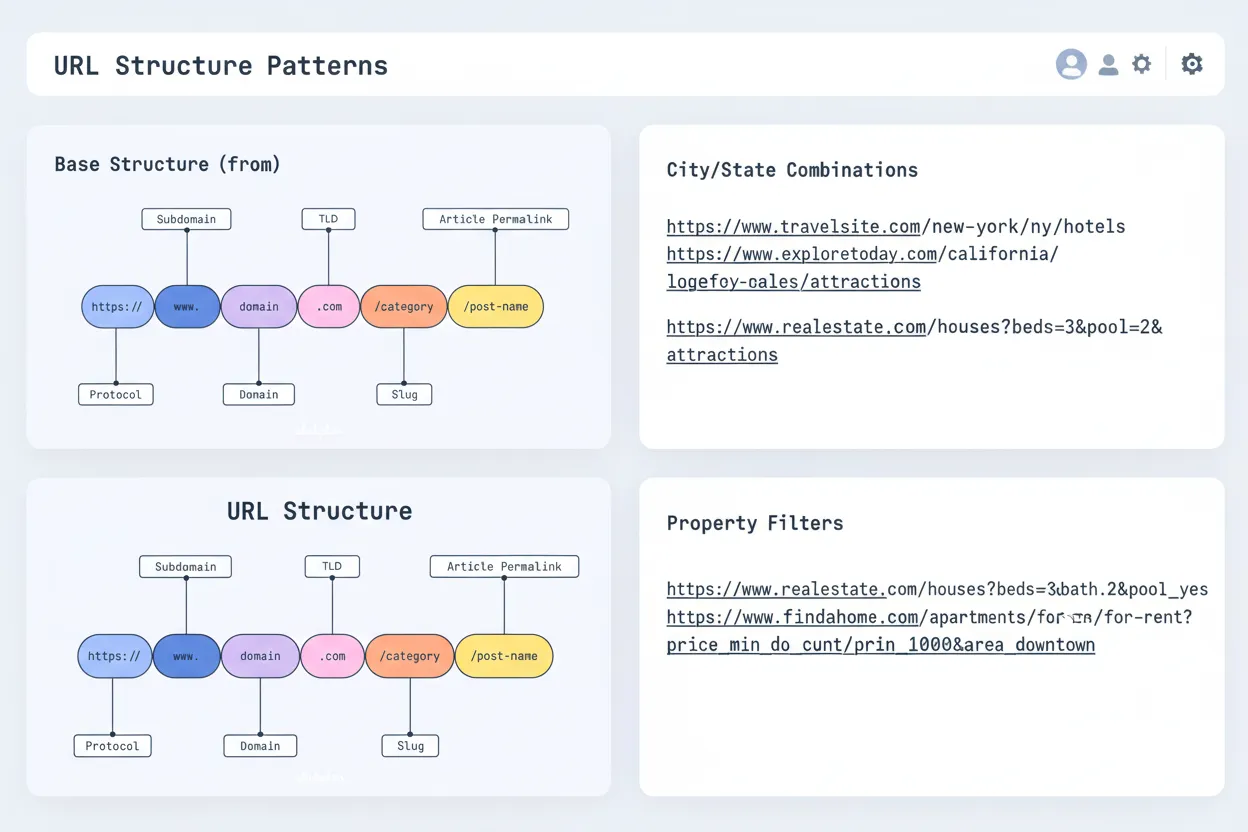
Airbnb’s URL architecture reveals the sophistication of their programmatic approach. They identified four primary URL patterns that capture different user search intent:
| URL Pattern | Example | Target Keywords |
|---|---|---|
/{city}-{state}/stays | /new-york-ny/stays | ”New York vacation rentals” |
/{city}-{state}/stays/{property-type} | /miami-fl/stays/houses | ”Miami beach houses” |
/{city}-{state}/stays/{feature} | /new-york-ny/stays/apartments | ”Manhattan apartments” |
/{location}/stays/{property-type} | /united-states/stays/cabins | ”cabins in USA” |
Each URL pattern serves a specific search intent while maintaining consistency across their platform. The {city}-{state} format ensures geographic clarity, while property type and feature modifiers capture more specific user preferences.
Technical Implementation: Airbnb’s backend automatically populates these templates with relevant listings, reviews, pricing data, and location-specific content, ensuring each page provides unique value rather than duplicate content.
What Content Strategy Powers Airbnb’s Automated Pages?
Creating millions of pages means nothing without quality content that serves user needs. Airbnb’s content strategy combines automation with human insight to ensure each programmatically generated page delivers value.
Their automated content system includes:
- Dynamic property listings pulled from their database based on location and type filters
- Location-specific information including local attractions, transportation, and neighborhood details
- User-generated content such as reviews and ratings that refresh automatically
- Pricing insights and availability data that updates in real-time
- Related recommendations suggesting similar properties or nearby locations
The genius lies in how they avoid thin content. Each page aggregates substantial information: property details, high-quality photos, verified reviews, local guides, and booking functionality. This creates comprehensive resources that satisfy user search intent while providing clear conversion paths.
Content Quality Assurance: Rather than generating generic descriptions, Airbnb’s system pulls real data from active listings, ensuring every page contains current, relevant information that travelers actually need.
What Results Has Airbnb Achieved Through This Strategy?
The numbers behind Airbnb’s programmatic SEO success demonstrate the power of systematic content generation at scale:
- 1.1+ million pages created through automated template systems
- 15% of total traffic comes from organic search results
- $84 billion valuation achieved with SEO as a key growth driver
- Millions of location-based keywords ranked across global markets
- 18+ million monthly visitors attracted through search optimization
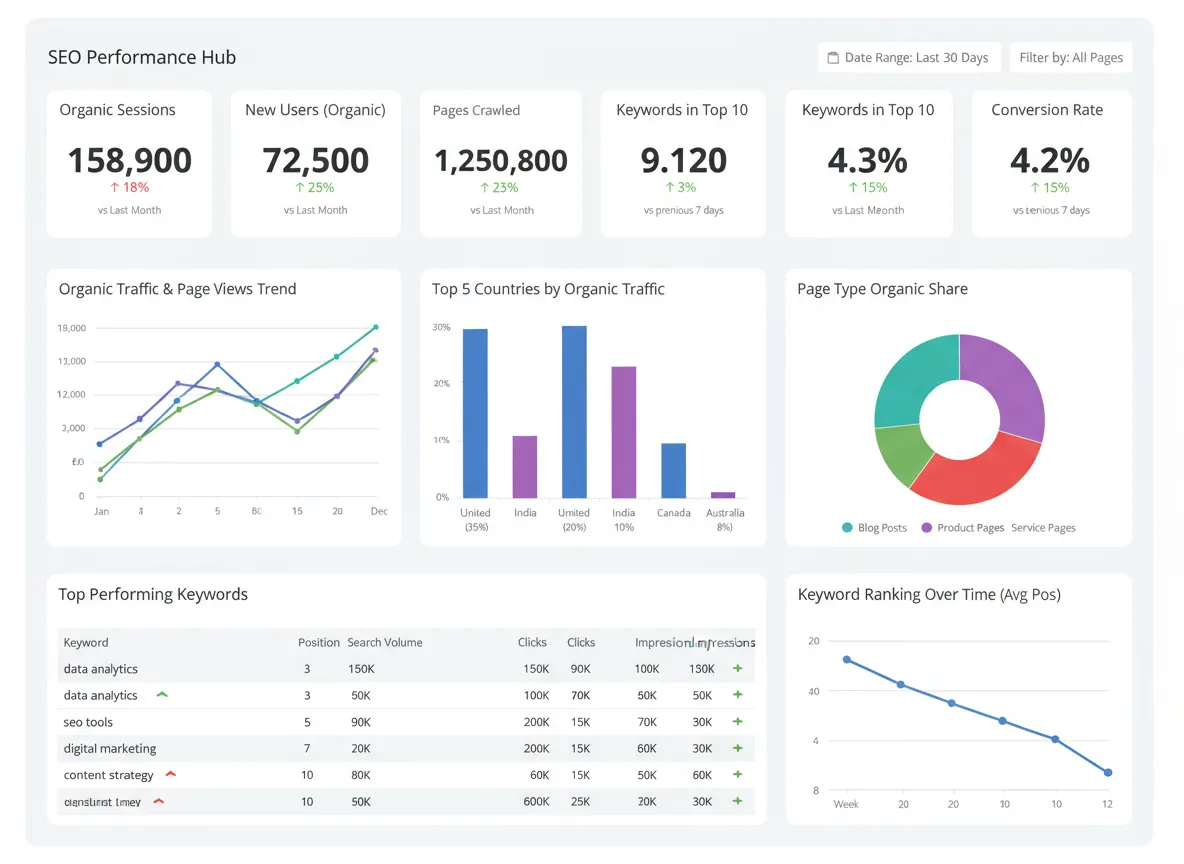
Airbnb’s organic search traffic accounts for nearly 15% of their total visitors, contributing significantly to their market dominance in the travel industry. Their programmatic approach allows them to rank for location-specific queries that would be impossible to target manually.
The impact extends beyond traffic metrics. By dominating search results for location-based accommodation queries, Airbnb has created a significant competitive moat. New entrants would need to invest enormous resources to match their search presence across thousands of markets globally.
How Can You Implement Airbnb’s Programmatic SEO Approach?
Airbnb’s programmatic SEO success offers a blueprint for businesses seeking to scale their search presence systematically. The key lies in identifying repetitive content opportunities within your industry and building automated systems that generate unique, valuable pages at scale.
The essential elements for replicating their approach include: establishing clear URL patterns that match user search behavior, building content templates that avoid duplication while providing real value, leveraging existing data assets to populate pages automatically, and ensuring technical infrastructure can handle large-scale page generation and updates.
Success with programmatic SEO requires patience and technical investment upfront, but the long-term benefits—as Airbnb demonstrates—can fundamentally transform your market position and organic growth trajectory.